
Build Low-Impact Restaurants Without Compromising Design

Sustainability in restaurants isn’t a trend — it’s table stakes. But designing a low-impact space that still feels warm, intentional, and unmistakably you? That takes real strategy. At ROY, we believe sustainability isn’t a separate layer of design. It is the design. It touches everything: planning, materials, construction, and how the space actually operates once the doors open. Here’s our distilled, ROY-approved guide to building restaurants that tread lighter and last longer.
1. PLAN: Sustainability Starts Before the First Hammer Swing
If you want a low-impact project, don’t wait until demolition to think sustainably — it’s already too late.
Smart planning reduces waste, saves money, and prevents the “change-order spiral” that kills budgets and sustainability goals.
Our planning philosophy:
- Build the right team early. Designers, GCs, fabricators, waste partners — get everyone aligned from day one.
- Set real reuse goals. Keep, rehome, salvage. Every piece you don’t toss buys you longevity elsewhere.
- Budget for deconstruction, not demolition. Pull things apart with intention so they can live again.
- Prioritize materials with integrity. Healthier for people, healthier for the planet, and more durable long-term.
- Buy used where it makes sense. Save the splurge for the things guests actually touch and remember.
Good planning is the difference between a sustainable restaurant and a sustainable-looking one.
2. REDUCE WASTE: The Greenest Move Is Often Keeping What Already Exists
The easiest way to lower your environmental impact? Stop throwing everything away.
A design mindset that respects existing conditions — not as obstacles, but as assets — creates smarter, more soulful spaces.
How we think about waste:
- Avoid unnecessary demo. If something can stay, let it.
- Repurpose materials. Wood, fixtures, equipment — more can be reused than you think.
- Sort materials properly. Better sorting = better recycling = lower environmental footprint.
- Design waste management into the project. Build systems that support food waste, composting, and recycling once the restaurant is actually operating.
Restaurants generate a ton of waste by default. Good design dramatically changes that math.
3. DESIGN: Choose Materials That Wear In, Not Wear Out
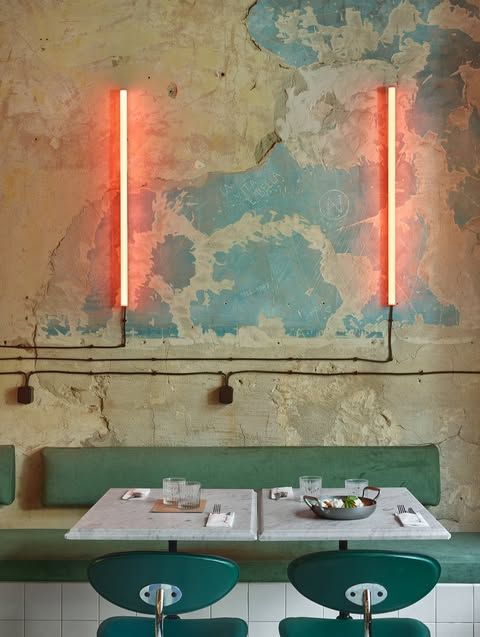
Sustainable design doesn’t mean “aesthetic compromise.” If anything, great hospitality design is rooted in materials that age beautifully.
The ROY approach:
- Start with what’s already in the space. If you can keep the bones, keep the bones.
- Work with local makers. Cuts down carbon, boosts community, and creates one-of-one details.
- Use real materials. Wood, metal, stone, leather — the stuff that patinas, not peels.
- Invest in longevity. The cheapest option is always the most expensive in the long run.
Great restaurants feel lived-in on day one and only get better with time.
4. SPECIFY: The Details That No One Sees (But Everyone Feels)
This is the part nobody talks about on Instagram: sustainability lives and dies in the specifications.
What we prioritize:
- Grout that actually holds up. Underrated but game-changing for the lifespan of tiled surfaces.
- Durable tile systems. Heat, grease, traffic — if it can’t handle restaurant reality, it’s a waste.
- Recycled content where performance stays high. No greenwashing — materials need to earn their keep.
- Products with transparency. EPDs, HPDs, Red List–Free options support healthier spaces.
Specifying correctly means fewer replacements, fewer repairs, and a longer-lasting restaurant — which is sustainability in its purest form.
5. BUILD: Collaboration Over Chaos
Construction is where sustainability gets pressure-tested.
Our build principles:
- Align your partners early. The more coordinated the drawings, the less waste in the field.
- Communicate constantly. Nothing cuts down waste faster than clarity.
- Build for longevity, not speed. Fast is fine. Durable is better.
- Sort clean material loads. Wood, metal, drywall — separating improves recycling rates significantly.
We’ve built enough restaurants to know: the best ones are the result of honest conversations and zero ego.
6. OPERATE: Sustainability Isn’t Finished at Opening — It Begins There
A restaurant’s environmental footprint lives in the day-to-day.
We design for how the space works, not just how it photographs.
Operational choices that matter:
- Consolidate processes with a Hub + Spoke model. Less equipment, less energy, less waste.
- All-electric where possible. Cleaner for staff, cleaner for the planet, easier to future-proof.
- Integrate regenerative programs. Even 1% of sales can fund real agricultural impact.
Sustainable operations are efficient operations — and efficient operations are profitable ones.
THE ROY TAKEAWAY: Build for Impact, Not Just Aesthetics
Low-impact design isn’t about making sacrifices. It’s about making smarter choices that create richer, more intentional spaces. Restaurants that last. Materials that perform. Systems that support the team, the guest, and the planet.
If you want a restaurant that’s beautiful and built responsibly, start with the decisions that will matter five years from now — not just five weeks before opening.